
 GlobalEnglish (en)
 Bosna i Hercegovinabosanski (bs)
 Chileespañol (es)
 Srbijasrpski (sr)
- Србијасрпски (ћирилица)
 United StatesEnglish (us)
GlobalEnglish (en)Bosna i Hercegovinabosanski (bs)Chileespañol (es)Srbijasrpski (sr)Србијасрпски (ћирилица)United StatesEnglish (us)Engineered for enhanced energy yield and structural stability, the STM Manually-Adjusted Single-Axis Tracker with ballast box enables seasonal tilt adjustments for optimal solar exposure—without ground penetration.
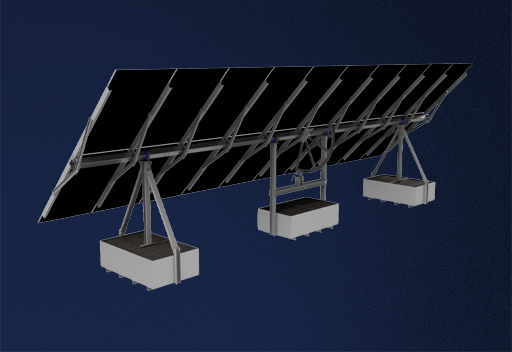
Manually-Adjusted Single Axis Tracker with Ballast Box
2 × 10 Layout
Check out our Manually-Adjusted Single-Axis Tracker’s structural specifications.
Dimensions
Tilt Angle
Ground Clearance
Design Wind Load
Material
Total Structural Mass w/o Solar Panels
Foundation System
4.8 × 13.4 × 4.9 m (W × L × H)
35° - 54°
0.7 m
< 98 mph (< 43.8 m/s)
Hot-Dip Galvanized Steel S355
1,350 kg
3 Ballast Boxes

Request more information about this product and find out the best way it can fit your needs.
Inquire About ProductHave questions about our Manually-Adjusted Single-Axis Tracker? Some of these might help you.


A manually adjusted single axis tracker allows solar panels to rotate along one axis to optimize sun exposure throughout the year, with tilt adjustments performed manually at scheduled intervals rather than automatically.
Ballast boxes provide structural stability by using on-site materials, eliminating the need for ground penetration and making the system ideal for landfills, rocky terrain, or sites with soil restrictions.
Manual adjustments are typically performed seasonally (2–4 times per year) to optimize tilt angles based on the sun’s position, improving energy yield compared to fixed-tilt systems.
Manually adjusted systems offer lower upfront costs, reduced maintenance, no motors or actuators, and greater long-term reliability while still increasing energy production over fixed structures.
Yes. The structure is engineered for wind and snow loads, and the ballast design enhances stability while avoiding foundation work, making it suitable for challenging environments.
Didn’t find what you were looking for? Head over to our contact page and message us.
We’ll make sure to respond as soon as possible.